
Political Crisis Threatens 2026 World Cup as Tournament Reaches 100-Day Countdown
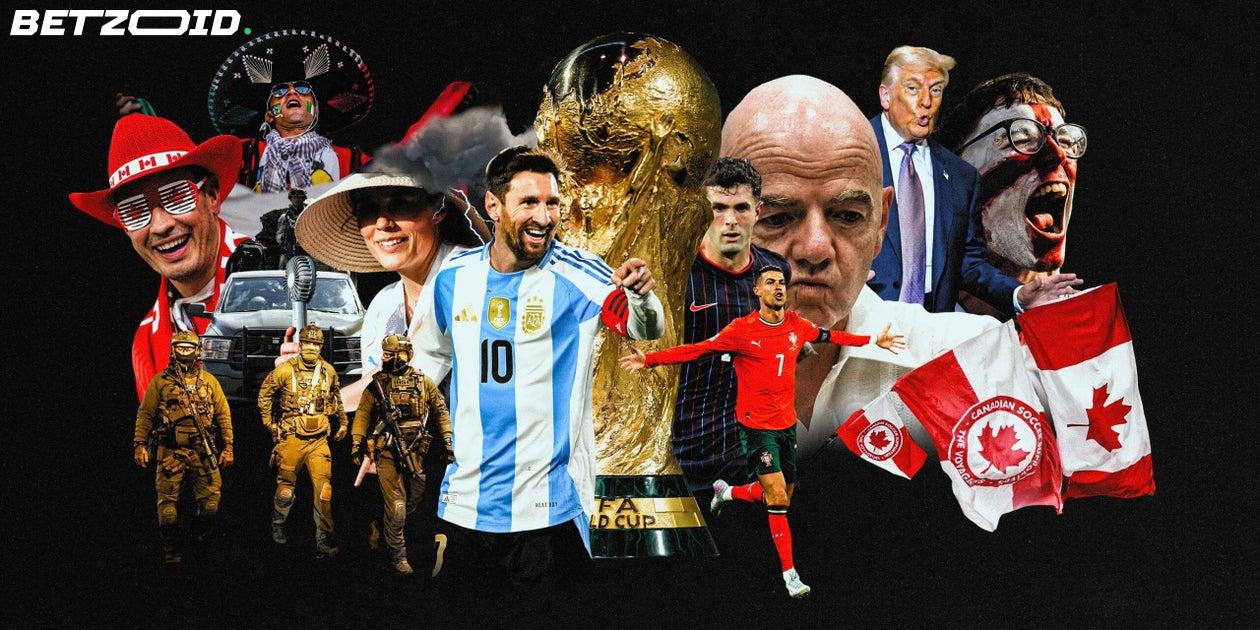
The countdown is on. In just 100 days, the most ambitious FIFA World Cup in history will begin, featuring 48 nations competing across 104 matches in three host countries: Canada, the United States, and Mexico. FIFA President Gianni Infantino has boldly declared it "the greatest event that humanity, mankind, has ever seen."
However, as the tournament approaches, a cloud of political uncertainty hangs over what should be a celebration of global football.
The scale is unprecedented. FIFA projects that six billion viewers worldwide will tune in—representing nearly three-quarters of the planet's population. Initial ticket applications exceeded 50 million within the first 30 days. The roster of talent is extraordinary, featuring superstars like Lionel Messi, Cristiano Ronaldo, Erling Haaland, Kylian Mbappé, and emerging sensations such as Lamine Yamal.
The tournament will also mark historic debuts for Cape Verde, Curaçao, Jordan, and Uzbekistan—underdog narratives that typically generate tremendous excitement among football supporters.
Escalating Political Tensions Cast Shadow Over Tournament
Despite the promise of exceptional football, mounting political tensions are creating significant concerns for organizers and fans alike. Initial friction between the three co-hosting nations—Canada, the U.S., and Mexico—was only the beginning.
Immigration enforcement measures have threatened visa approvals for supporters traveling from Senegal, Côte d'Ivoire, Haiti, and Iran. Diplomatic tensions involving the United States have strained relationships with Denmark and several European Union members. Incidents of violence in Minneapolis have triggered demonstrations, while drug cartel conflicts in Guadalajara, a designated host city, have intensified security worries.
The situation escalated dramatically when military actions involving the United States and Israel targeted Iran, reportedly resulting in the death of Iran's Supreme Leader. Iran responded with retaliatory strikes on U.S. military installations throughout the Middle East.
Now, serious questions exist about whether Iran will compete in Group G alongside Belgium, Egypt, and New Zealand. If Iran withdraws, it would represent the first World Cup withdrawal since 1950—a development that would carry significant historical weight.
Implications for Canadian Fans and Bettors
For Canadian supporters planning to attend matches and those placing wagers on tournament outcomes, these developments create substantial uncertainty. Ticket prices have reached record levels, accommodation costs are extraordinary, and government officials have warned about potential "catastrophic" security shortfalls if funding disputes continue.
Should Iran withdraw from the competition, Group G dynamics would shift completely. Belgium would emerge as overwhelming favourites, while the prospects for Egypt and New Zealand would change dramatically. Anyone holding futures bets on group winners should monitor these developments closely.
Despite the turmoil, the tournament is scheduled to commence on June 11 when Mexico faces South Africa at the iconic Estadio Azteca. Canada will begin their World Cup journey on June 12 in Toronto, while the United States opens against Paraguay at SoFi Stadium later that evening.
Past tournaments have certainly faced controversy. Russia 2018 became a propaganda platform before FIFA ultimately suspended Russia following its invasion of Ukraine. Qatar 2022 brought international attention to migrant worker treatment and LGBTQ+ rights issues. Both South Africa 2010 and Brazil 2014 encountered significant safety concerns.
However, the current situation feels qualitatively different. The level of political instability is alarming even to veteran football journalists. The "United" bid that secured hosting rights emphasized unity, stability, and minimal risk. At present, none of those promises appear secure.
The optimistic view is that once matches begin, football will provide a much-needed escape. World Cups have historically brought people together across cultural and political divides. Anyone who has attended a World Cup can recall stories of rival supporters sharing celebrations and exchanging jerseys. The camaraderie between Mexican and South African fans in 2010 remains legendary. Brazilian and Scottish supporters have created unforgettable moments at past tournaments through their shared enthusiasm.
This World Cup will undoubtedly shatter every attendance and revenue record in the tournament's history. Canadian fans will witness Messi and Ronaldo competing on the world's biggest stage potentially for the final time. The championship match at MetLife Stadium on July 19 will attract billions of viewers globally.
Yet beneath the excitement lies genuine uncertainty. A tournament designed to unite the world is launching amid dangerous global tensions. The fundamental question remains: Can football bring humanity together when geopolitical forces are pulling us apart? The answer will unfold over the next 100 days and beyond.