
Atlanta's Mercedes-Benz Stadium Completely Overhauls Playing Surface Ahead of 2026 World Cup
"The pitch was an absolute disaster. It felt like it was bouncing beneath you as you ran." Emiliano Martínez didn't hold back following Argentina's Copa América opening match in Atlanta back in 2024 — and his assessment was spot on. The temporary grass pitch at Mercedes-Benz Stadium was uneven, inconsistent, and according to the goalkeeper, felt like competing on a trampoline. Defender Cristian Romero described it as "embarrassing," while manager Lionel Scaloni openly questioned why the surface had been installed mere days before the tournament began.
Nearly two years on, Atlanta has answered those criticisms by completely removing the old system and rebuilding from the ground up.
A complete reconstruction
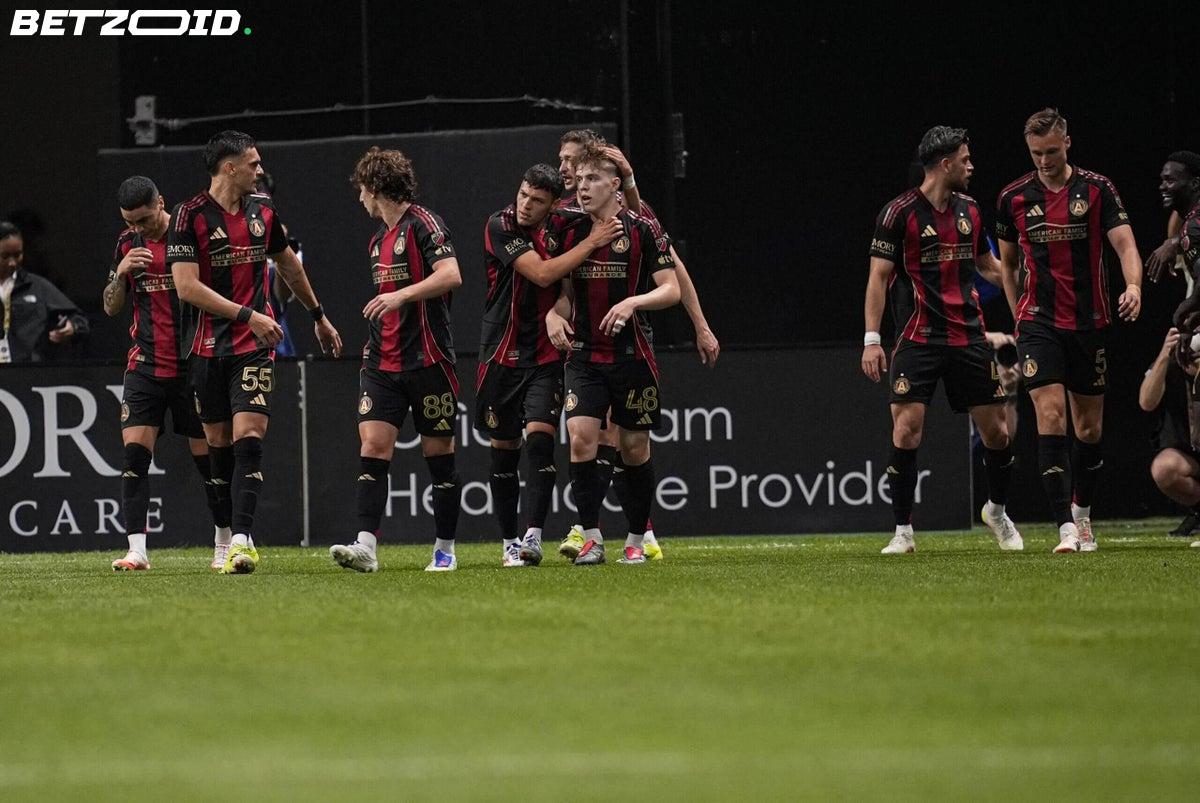
The previous configuration — massive grass sections placed directly onto an asphalt foundation — has been entirely eliminated. Construction teams stripped away the asphalt along with several layers of underlying rock, then excavated further to properly install natural sod below ground level. Atlanta United has already tested the new surface by playing three Major League Soccer regular-season matches on it. This wasn't a last-minute decision, but rather a strategic testing phase.
The grass comprises a rye-bluegrass mixture with synthetic stitching woven into the backing to provide structural integrity — strong enough to maintain stability while still allowing natural cleat separation. The drainage infrastructure has been modernized, the irrigation network enhanced, and cutting-edge grow lights have been installed to maintain healthy grass inside a domed facility where the retractable roof remains permanently sealed. That final detail carries more significance than it might initially appear: once Atlanta's sweltering summer temperatures arrive, opening the roof would destroy the grass. Consequently, the entire system — lighting, climate control, and irrigation — has been designed specifically to function with a closed roof.
FIFA's head of pitch infrastructure, Ewen Hodge, conducted a site visit in February. His explanation regarding the sand layer now positioned beneath the turf directly addresses Martínez's original complaint: "Once we achieve more consistent water distribution across the entire area, the whole surface maintains its integrity and cohesion for longer periods." The trampoline sensation was fundamentally a cohesion issue. That problem has been resolved.
Silence means success
The 2025 Club World Cup served as the inaugural test. Atlanta hosted six fixtures. Players and managers remained silent — at least publicly — regarding the pitch quality. Adam Fullerton, the stadium's vice-president of operations, explained it clearly: "Sometimes silence is positive feedback. When people are criticizing something, you'll hear about it immediately."
Atlanta is scheduled to host eight World Cup matches in 2026, including a round-of-16 clash and a semi-final. The United States men's national team faces Belgium there this Saturday, followed by Portugal three days later — representing the first genuine public evaluation of the reconstructed playing surface. In May, FIFA assumes control and will install its own standardized pitch across all artificial turf venues throughout the United States.
Hodge's goal is straightforward: "We don't want to hear anything about it." Following the Copa América controversy, that silence might represent the best possible result Atlanta could hope to achieve.