
World Cup 2026: No More Excuses for Host Nation USA
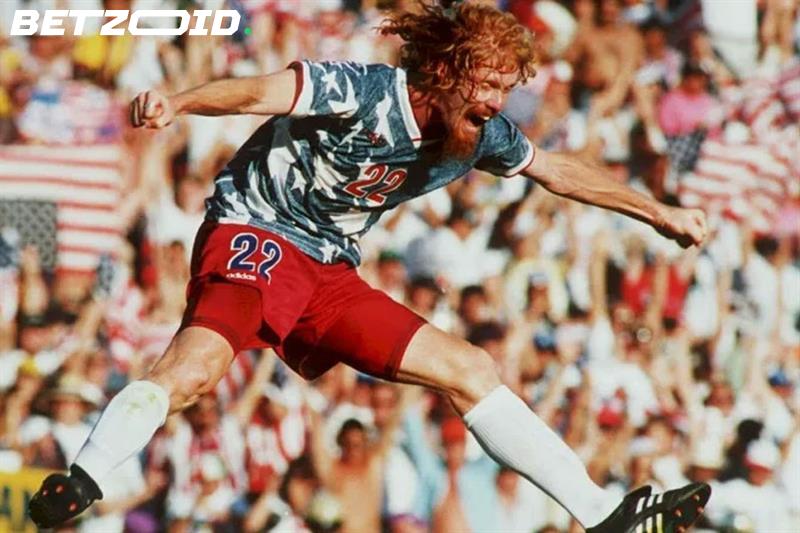
"The era of low expectations is finished." When Alexi Lalas made that statement, the silence from his critics was deafening. Three decades after the iconic red-bearded defender helped legitimize American soccer on the world stage, the World Cup returns to United States territory — and this time, there's nowhere to hide.
The 2026 edition, jointly hosted alongside Mexico and Canada, comes at a pivotal juncture for US soccer. The foundation is finally in place: a thriving professional league attracting world-class talent, a passionate supporter base exceeding 100 million, and development academies gradually churning out credible prospects. Since 1994, the same question has echoed after every major tournament — has soccer truly arrived in America? This time around, an early exit would leave that question painfully unanswered.
Lalas, who has transitioned into television punditry, set the minimum standard at reaching the round of 16. Stu Holden, the ex-midfielder now working in broadcasting, raised the bar even higher: "Based on realistic assessment, this squad should be capable of reaching the final four." That means a semifinal berth. On American turf. Against the planet's elite footballing nations.
Development system still needs work
Major League Soccer outdraws most European competitions in attendance figures. Lionel Messi plies his trade in Miami. Manchester City's Chief Marketing Officer Nuria Tarre reports that 32 million Americans follow her club. The commercial growth is undeniable.
Yet Jozy Altidore brings perspective to the conversation. "European academies operate at a completely different level," he noted. "They function like production lines — Barcelona loses Messi, and suddenly Yamal emerges. That doesn't happen by chance." America hasn't built that systematic talent pipeline. Investment has poured into premium training facilities, but whether those resources have trickled down to grassroots levels where elite players are actually forged remains questionable.
Altidore's observation addresses systemic issues, not pessimism. Creating environments that push players beyond comfort zones rather than protecting them — that's the formula for developing international-calibre footballers. The United States hasn't solved that equation, and World Cup enthusiasm won't magically fix it before kickoff.
Defining success for 2026
Carli Lloyd, who experienced home World Cup glory firsthand, offers a different perspective from the talking heads. "Success for this team will be measured by their ability to inspire the nation. That's their real power — and it's completely within their grasp."
That represents a more authentic yardstick than simply naming a tournament round, though it's considerably more nuanced. The 1994 World Cup filled venues and ignited youth soccer participation for years afterward. The 1999 Women's World Cup achieved something deeper — Brandi Chastain's penalty celebration became a defining cultural image that broke through sports boundaries. The 2026 men's squad is pursuing that kind of legacy.
The Americans face Belgium in a friendly match this Saturday — a valuable preliminary test against opposition capable of exploiting defensive weaknesses. Any stumble will intensify the pressure, with host-nation expectations already weighing heavily on these players.
According to January statistics, soccer now ranks as America's third most popular sport. That milestone carries genuine significance. But milestones don't guarantee knockout stage victories. As Lalas framed it: falling short of the round of 16 constitutes failure. And nobody's offering counterarguments.