
Mouth Covering Now Punishable by Red Card Under New IFAB World Cup Regulation
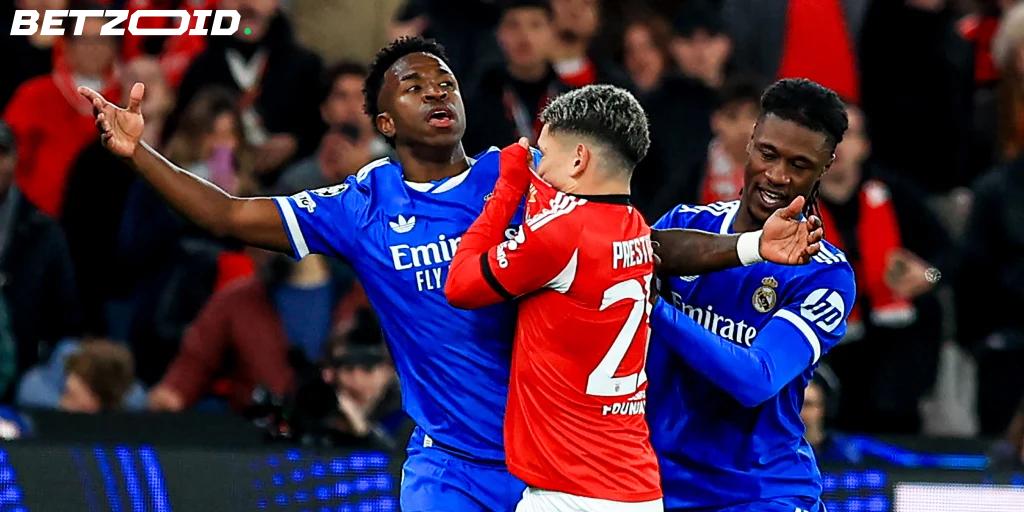
Football's governing body has implemented a groundbreaking disciplinary measure: players who conceal their mouths during on-pitch disputes will face immediate ejection. The International Football Association Board unanimously approved this regulation, which stems directly from a controversial Champions League incident involving Real Madrid's Vinícius Júnior and Benfica's Gianluca Prestianni last February.
During the same session held in Canada, IFAB members also greenlit a second disciplinary enhancement: players who exit the playing surface in protest of officiating decisions will similarly receive red cards. Both regulations mark significant shifts in how football authorities address player conduct.
The February Incident That Changed Everything
The catalyst occurred approximately 50 minutes into a Champions League match. After Vinícius celebrated a goal with his characteristic dance moves, Prestianni approached with his jersey pulled over his mouth. Following their exchange, Vinícius immediately sought out the match official, visibly distressed, and made the crossed-arms gesture indicating alleged racist abuse. Officials halted play and launched an investigation.
Despite no immediate in-match consequences, Vinícius subsequently told media that Prestianni had directed racial slurs toward him. Prestianni countered via Instagram, claiming Vinícius had "regrettably misunderstood what he thought he heard."
The situation escalated when Kylian Mbappé provided testimony. "He said it five times," Mbappé stated unequivocally. "I am speaking as clearly as possible. I am telling you what I think and what I heard, and I heard it very well." This wasn't mere support—it constituted direct eyewitness evidence that amplified the controversy.
Prestianni's defence to UEFA officials claimed he had used homophobic language rather than racist terminology. UEFA ultimately imposed a six-match suspension for homophobic discrimination. The distinction proved significant, as racist abuse carries a 10-match ban, affecting both legal outcomes and public perception.
The Reasoning Behind This Regulation
FIFA President Gianni Infantino articulated the rationale to Sky News with characteristic directness: "There must be a presumption that he has said something he shouldn't have said, otherwise he wouldn't have had to cover his mouth." The straightforward logic resonates, though the rule's absolute nature will undoubtedly spark controversy.
Implementation challenges are genuine. Match officials already shoulder immense responsibilities during live competition. Determining whether mouth covering represents deliberate concealment versus unconscious behaviour will create grey-area decisions. Clubs losing players to this regulation during critical knockout matches will certainly voice concerns.
Nevertheless, football faced an undeniable issue, and this represents a definitive response. The Vinícius-Prestianni situation demonstrated how effortlessly players can make statements on the pitch and subsequently deny them indefinitely. This development adds another dimension to disciplinary considerations during major tournaments.
Prestianni continues serving his six-match UEFA suspension. Vinícius, meanwhile, never received conclusive confirmation about what was actually said to him during that evening in Lisbon.