
FIFA Congress 2026: Russia Ban, Racism Crackdown & Prize Money on the Agenda in Vancouver
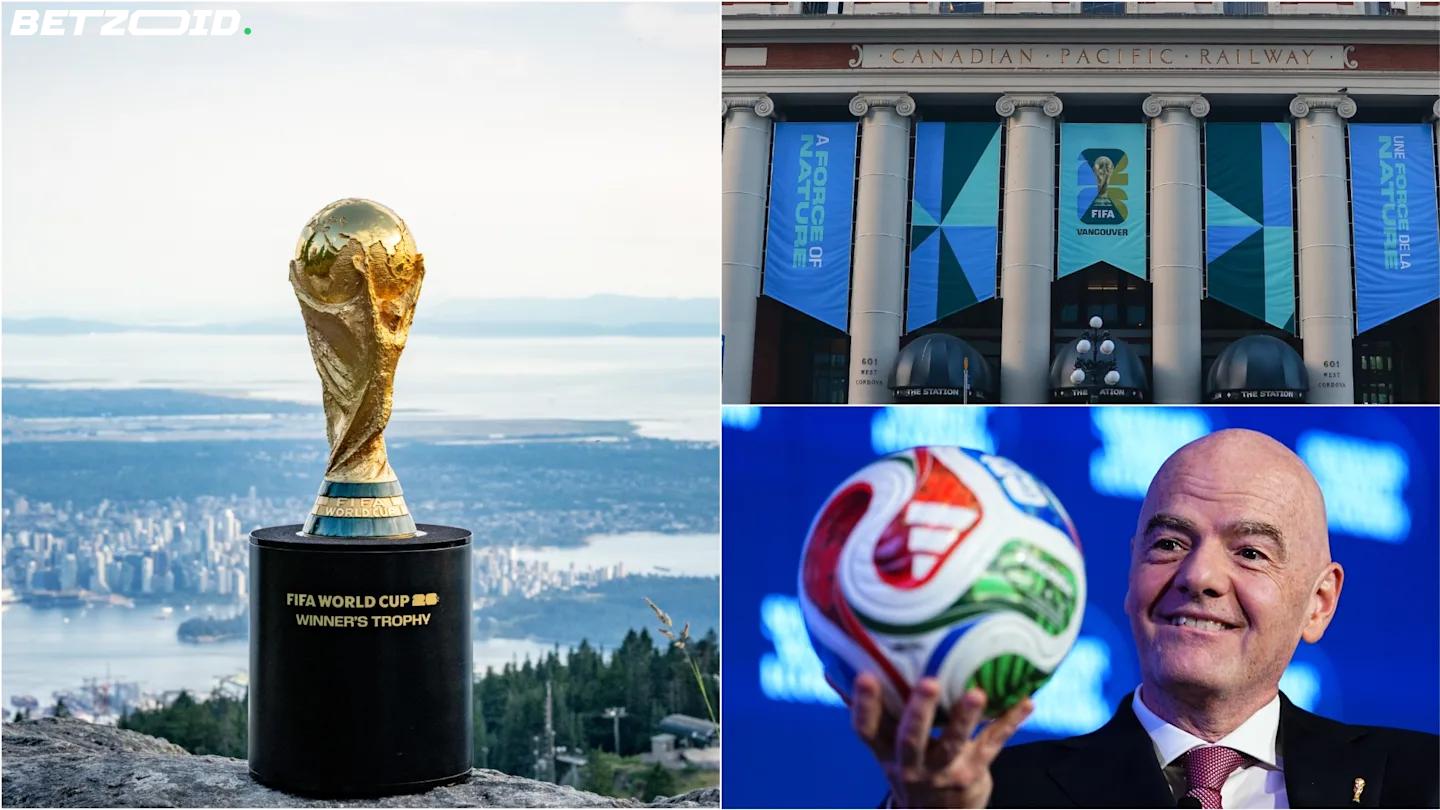
With just fifty days remaining until the World Cup kicks off, FIFA's 211 member associations are convening in Vancouver for a Congress that promises to be far more than a formality. Critical issues including Russia's competitive status, on-field racism, tournament prize money, and a politically controversial new award are all up for discussion. Many of these topics have been waiting for meaningful action for far too long.
Anti-Racism Initiatives Under Scrutiny After Two Years
FIFA introduced its "Global Stand Against Racism" campaign in 2024, structured around five core elements: enhanced sanctions, a three-step match intervention protocol, educational programming, a player advisory panel, and advocacy for international criminal recognition of racist behaviour. The three-step intervention has been regularly deployed — predominantly in Concacaf competitions, where Mexican national team matches have frequently triggered the protocol due to homophobic chants from supporters.
Two years into the initiative, the Congressional review is anticipated to advocate for more severe consequences, especially considering the ongoing abuse directed at players such as Vinícius Junior. Real Madrid goalkeeper Thibaut Courtois didn't mince words in February: "We have to end this now. It has happened many times in football; not just on the pitch but in the stands." The significance of such statements coming from fellow players rather than advocacy organizations cannot be overstated. The pressure on FIFA to move beyond symbolic actions and implement substantive change has intensified.
The true measure of this Congress will be whether it produces concrete enforcement mechanisms — such as match forfeitures and stronger federation sanctions — or simply generates another round of statements without teeth.
Russia's Suspension: Seven Words with Massive Implications
The official Congress agenda references it in just seven words: "Suspension or expulsion of a Member Association." Yet every delegate understands the gravity of what this means. Russia has been excluded from FIFA and IOC competitions since its 2022 military invasion of Ukraine, though FIFA president Gianni Infantino controversially stated in February that the ban "has not achieved anything, it has just created more frustration and hatred." The remark sparked immediate backlash.
The reality is more nuanced than a straightforward prohibition. Russia's football federation maintains its full membership status within UEFA and FIFA — only the national teams face competitive restrictions. Russian men's teams have continued participating in unsanctioned friendly matches against nations including Mali, Peru, Bolivia, and Iran. FIFA has also announced an Under-15 tournament "open to all member associations," which appears to signal consideration of youth-level reintegration.
The International Paralympic Committee has already permitted Russia to compete under its own flag at the Milan Cortina 2026 Games. World Aquatics has taken similar steps. While FIFA may not be first to reverse course, Infantino appears prepared to explore that direction. The trajectory is increasingly apparent, and any modification to Russia's status could significantly alter qualifying structures for upcoming tournaments.
Prize Money Expansion and the Peace Prize Controversy
On the financial front, members will vote on further increases to the 2026 World Cup prize fund, which FIFA had already elevated to $727 million — representing a 50% increase from Qatar 2022. With tournament revenues projected to reach $11 billion, Infantino has suggested additional funding could be distributed to participating nations and all 211 member associations for development purposes. For smaller federations, these aren't insignificant amounts. Enhanced development funding directly impacts grassroots programming, coaching infrastructure, and player development pathways.
Meanwhile, Norway's Lise Klaveness is advocating for the elimination of FIFA's newly created Peace Prize before it awards a second recipient. The honour, introduced in 2025 without any transparent nomination process, was presented to Donald Trump at the World Cup draw ceremony in Washington. Klaveness — who also serves on UEFA's executive committee — has called for FIFA to maintain "an arm's length distance" from political figures. While she's not scheduled to speak publicly during the Congress, that hasn't prevented other federations from advancing similar arguments.
FIFA established the Peace Prize shortly after Trump's unsuccessful campaign for the Nobel Peace Prize. The timeline and optics remain difficult to separate from one another.