
FIFA Considers Ending Russia's Football Ban at Vancouver Congress
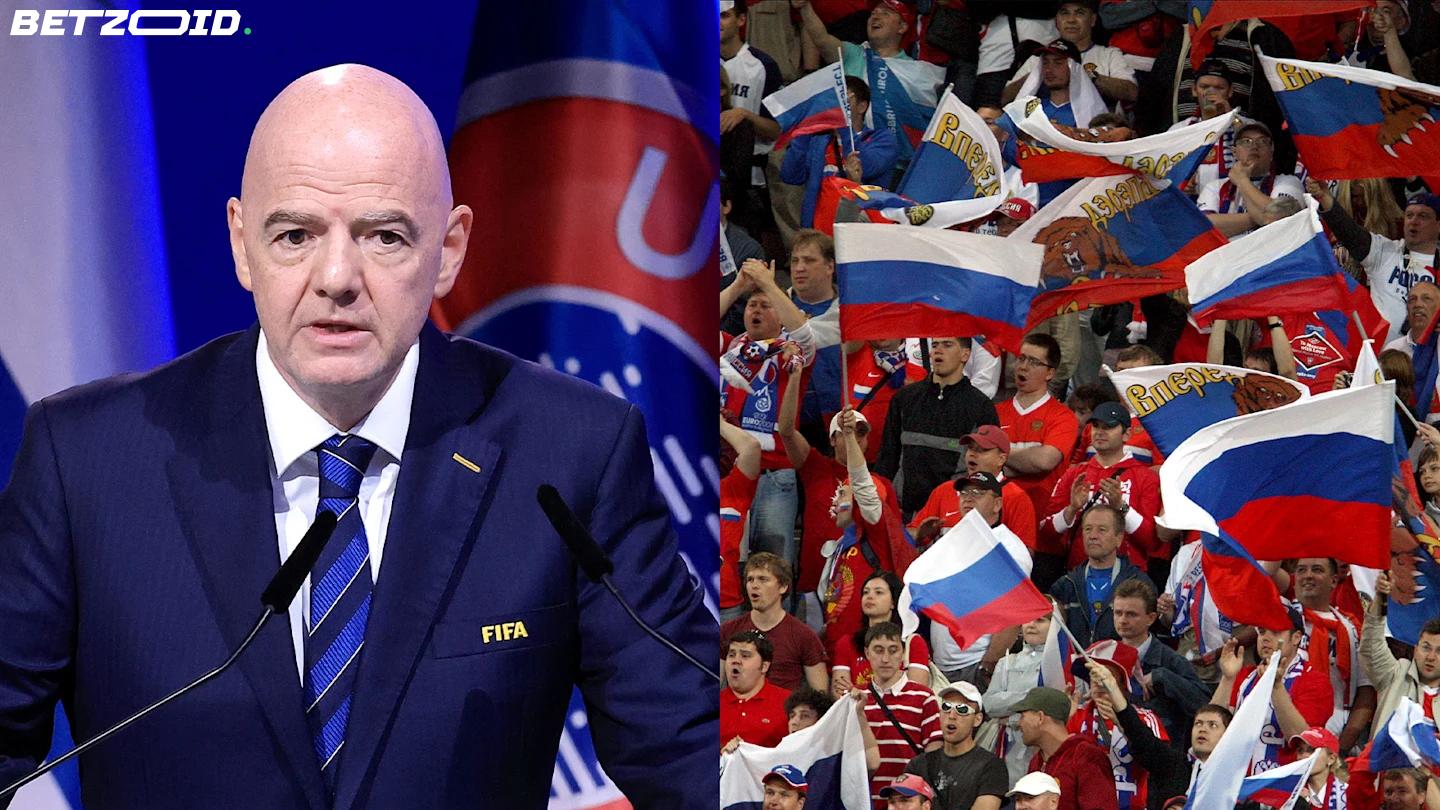
FIFA President Gianni Infantino didn't mince words when speaking to Sky News in February: "This ban has not achieved anything. It has just created more frustration and hatred." Those comments now take centre stage as over 1,600 delegates gather at Thursday's FIFA Congress in Vancouver to formally debate Russia's suspension — the first such discussion since the ban took effect three years ago.
Russian football teams have been shut out of all FIFA and UEFA competitions since February 2022, when the invasion of Ukraine triggered immediate sanctions. The exclusion is comprehensive: no men's senior matches, no women's fixtures, no youth-level competitions. Russia's senior men's team hasn't played a competitive match since their final 2022 World Cup qualifier — nearly five years ago. Instead, they've been relegated to arranging unofficial friendlies against nations like Mali, Nicaragua, Peru, Chile, and Iran. It's the kind of company you keep when most of the football world refuses to engage.
What Could Actually Happen in Vancouver
Thursday's Congress isn't expected to deliver immediate reinstatement, but it represents the strongest indication yet that FIFA leadership is actively pursuing that outcome. While suspended cases involving Pakistan and Congo are also on the agenda, neither carries the geopolitical significance of the Russia situation.
Infantino has already outlined a potential roadmap for Russia's return. FIFA's newly announced global U15 tournament, scheduled for 2027, is planned to be "open to all 211 FIFA member associations" — language that barely disguises its intention. If Russia participates at that level, the precedent would be set. From there, the most realistic target for the senior men's team would be qualifying for the 2028 UEFA European Championship, co-hosted by the United Kingdom and Ireland.
UEFA briefly explored allowing Russian U17 teams to return in 2023, arguing that young players shouldn't face consequences for government actions. However, intense pressure from European nations forced a reversal. That opposition hasn't weakened.
International Sport Is Already Moving
Football wouldn't be breaking new ground. The International Paralympic Committee permitted Russian athletes to compete under their national flag at the Milan Cortina 2026 Paralympics — the first time since 2018. World Aquatics has completely lifted its ban on the Russian flag and anthem.
Both decisions triggered significant controversy. Denmark, Finland, Iceland, Norway, and Sweden have joined boycott campaigns against World Aquatics specifically over this policy. The trend is unmistakable: international sporting organizations are gradually moving toward reintegration while the conflict persists, and a coalition of nations — especially in northern Europe — is mounting fierce resistance.
For UEFA tournament planners and betting markets, Russia's potential return would reshape European qualifying dynamics. Before the ban, Russia was a mid-tier European squad — not threatening elite nations in group play, but dangerous enough to take points from teams ranked below them. Projecting their strength after five years without competitive football presents a genuine challenge. Any qualifying draw that includes Russia in the next cycle carries substantial unpredictability.
Infantino's assertion that the ban "hasn't achieved anything" may be politically motivated, but it holds some sporting truth. The Russian Football Union continues to operate, fund teams, and organize matches. The suspension hasn't dismantled the underlying structure. What it has accomplished is removing Russia from competitive football for half a decade — and nobody, including FIFA, seems certain what kind of team will emerge.
"Having girls and boys from Russia being able to play football games in other parts of Europe would help," Infantino suggested. Whether that reasoning prevails in Vancouver — or gets overwhelmed by nations viewing sport as one of the few remaining leverage points — will become clear by week's end.